Euopean Chafer Beetle
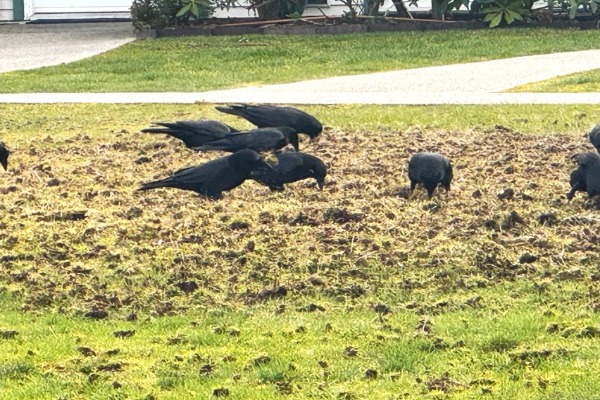 Lawn with chafer beetle
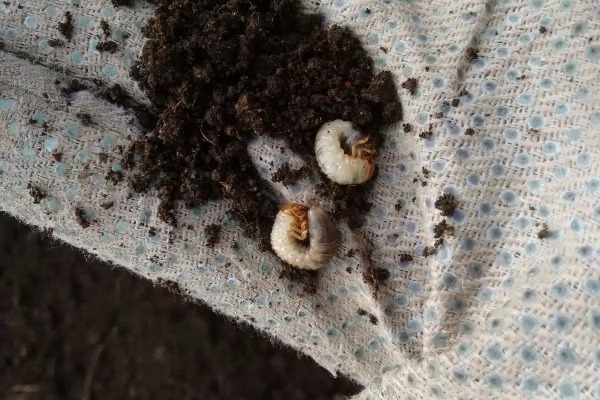 Chafer beetle grubs
Relatively new to the Sunshine Coast, but not to BC, the European Chafer beetle is an invasive species that feeds on the roots of all kinds of plants, including grass.
Wondering why your lawn looks brown and chewed up? It may very well be from the chafer beetle.
The chafer beetle starts as a grub that eats the roots of grass and is likely to choose thin or stressed lawns to eat. Wildlife such as crows and racoons eat the grubs, often uplifting patches of lawn.
You can check to see if your lawn has grubs by cutting a 30 by 30 cm square patch to a depth of 5 cm and folding the square back. Cut a few patches. If you see 5-10 grubs per section, you might have an infestation.
Prevention
Keep your grass healthy!
- Keep grass 6-9 centimeters long
- Fertilize and lime regularly
- Aerate compacted soil
- Water deeply, not frequently
- Consider replacing turf with tall fescue or other grass seed blends that are not so desirable by grubs.
Treating Infestation Naturally
- Plan to treat chafer beetle infestation in July.
- Purchase nematodes (Heterorhabditis bacteriophora) available at most garden centres. Nematodes are living organisms, so keep refrigerated until use. Nematodes are natural and exempt from the District's Pesticide Bylaw 441.
- Water your lawn well, to the consistency of a wrung-out sponge.
- Apply the nematodes to your lawn, as per product instructions. Water the lawn again after the application to help push the nematodes into the soil.
- Keep the soil moist for two to three weeks after applying the nematodes to ensure best results. This can usually be done within your lawn watering restrictions.
Treatment calendar:
October to March: No treatment available. Rake and repair as needed.
April to June: Purchase nematodes in preparation for application. Keep nematodes refrigerated.
July: Apply the nematodes as above and by package instructions.
August to September: Maintain regular watering and apply slow-release fertilizer.
Lifecyle of the chafer beetle
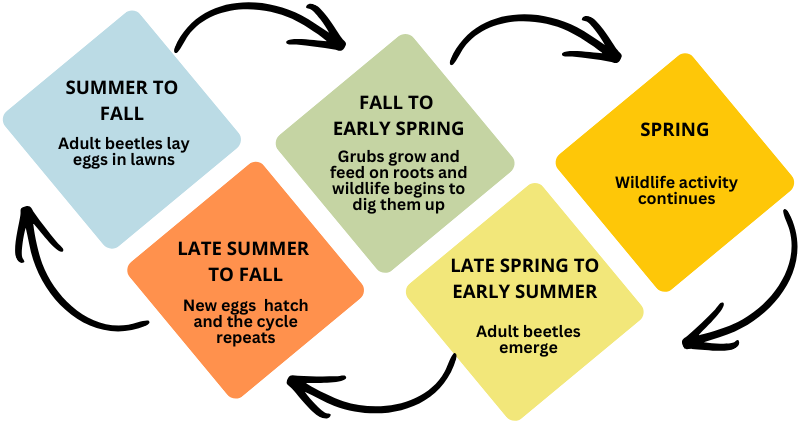
What to Do if there is an Infestation
If your lawn is infested and being dug up by hungry wildlife, place poultry wire over damaged areas. In cooler months, replace the torn turf and remove loose soil.
You can also raise the mowing height of your lawn.
Resources
European chafer in your lawn - City of Richmond
European Chafer - BC Ministry of Agriculture and Food
European Chafer Beetle - Invasive Species Council of BC
Sign up to our Newsletter
Stay up to date on the city's activities, events, programs and operations by subscribing to our eNewsletters.